Maria Huhmarniemi
|
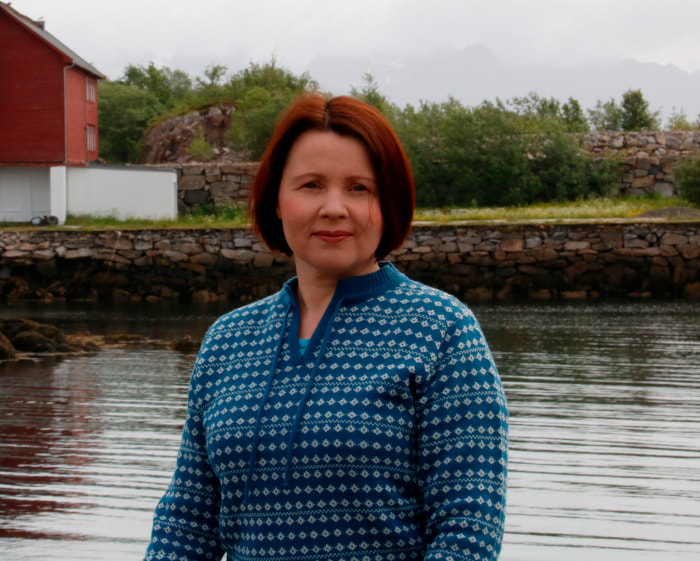
Maria Huhmarniemi, DA, is a Vice Dean and Associate Professor at the Faculty of Arts and Design, University of Lapland. She is dedicated to art and research that enhances cultural sustainability in the Arctic and promotes Arctic art and art education. She has created socially and environmentally engaged art and pioneered arts-based methods to address societal needs. Huhmarniemi also carries the title of docent at the University of Eastern Finland, specializing in social pedagogy. She is the vice-lead for the Arctic Sustainable Arts and Design network and is responsible for the Special Interest Groups: Arctic Arts and Visual Culture Education.
|
Highlights from research publications
Observation of change in pedagogical performance
|
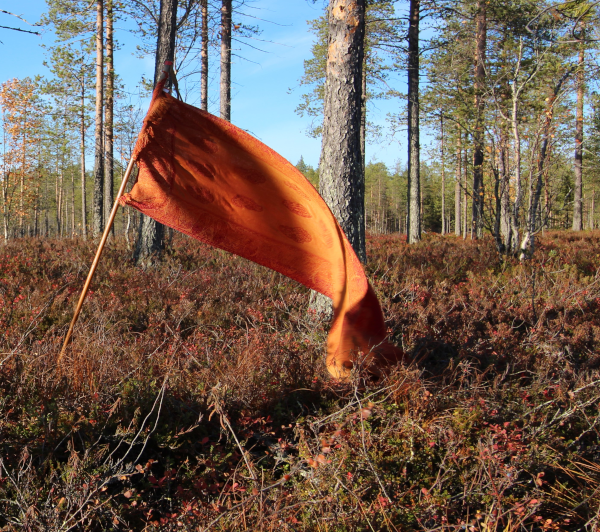
Participatory art, biodiversity and environmental ethics converge in a collaborative initiative within a forest restoration project. Focused on transitioning spruce forests to Indigenous birch ecosystems, the project involves artists, researchers and locals to explore human responsibility in ecological change. Using art-based action research, this visual essay examines how performative public art fosters kinship with human and non-human species while raising awareness of biodiversity. Through visual documentation, the study showcases art’s role in environmental discourse and comprehension.
Yläjoki, T., & Huhmarniemi, M. (2025). Observation of change in pedagogical performance. International Journal of Education Through Art, 21(2), 321–331, https://doi.org/10.1386/eta_00203_7 |
Shifting Ground: Art exhibition as informal pedagogy on changing ArcticThe chapter addresses the urgent need for innovative teaching and learning models that create and examine human-land relationships as collective expression. It presents how artists and art educators in northern regions of Canada and Finland address the impacts of climate change and natural resource extractions. Their art practices, which include aesthetic, material, interactive, time-based, sound, and performance elements, as well as viewer engagement in exhibitions, serve as a means to advocate for social, cultural and environmental justice. These regions share the urgency of landscapes in distress impacted by climate change, challenging distances of remote communities, land (and water) use, histories of colonialism and questions of sovereignty. Many local environmental conflicts are ongoing in Northern Finland and Canada, some of which have persisted for decades, causing community members to experience uncertainty and frustration. Artists and educators reflect on and respond to land use, mining, forestry and related conflicts that determine the region’s possible future and life. They also are optimists in their promotion of positive change.
Beer, R. & Huhmarniemi, M. (2024). Shifting Ground: Art exhibition as informal pedagogy on changing Arctic. In T. Jokela, M. Huhmarniemi & K. Burnett (Eds.), Relate North: New genre Arctic art education beyond borders (pp. 38–60). InSEA publications. https://research.ulapland.fi/en/publications/shifting-ground-art-exhibition-as-informal-pedagogy-on-the-changi |
|
Participatory art with trees: pedagogical approachThe study combined research in participatory art, transformative education and Arctic arts. The research aimed to enhance communication with nature and general nature connectedness and well-being. An art workshop and participatory installation were designed to foster dialogue between human subjects and powers of nature using various artistic and bodily exercises. Following the principles of arts-based research, it was enhanced through documentary photographs and participants’ reflections. Findings indicate that expanding dialogue and sense of community between humans and powers of nature provides a sense of integrity. The value and potential implications of contemporary art discussed in this article are associated with informal education: facilitating healing and creating an opportunity for including other-than-human into sense of community.
Huhmarniemi, M. (2023). Participatory art with trees: pedagogical approach. In R. Vella & V. Pavlou (Eds.), Art, sustainability and learning communities: Call to action. (pp. 217–226). Intellect. https://doi.org/10.1386/9781789388978_15 |
Be the nature: Enhancing nature-connectedness through art museum pedagogyThis chapter presents the implementation and outcomes of a developing pedagogical art workshop for the art exhibition With the Last Wolf in the Särestöniemi Museum in Kittilä, Northern Finland. According to Mayer (2005), to learn how to teach, art museum educators have looked to sources in art history, which is why art history has played a determining role in the content of educational experiences for art museums. In this chapter, we move from museum pedagogy derived from discipline-centred art history to transformative experiences for visitors and co-knowing-centred pedagogy in a posthumanistic sense. We concentrate on the test bed in the Särestöniemi Museum to answer this research question: How can art museum pedagogy enhance nature connectedness? We also ponder the potential of new kinds of art education entrepreneurship related to the Northern ecoculture due to growing interest in the Arctic’s creative economy and creative tourism.
|
Jokela, T.; Huhmarniemi, M. & Mäkitalo, T. (2024). Be the nature: Enhancing nature-connectedness through art museum pedagogy. In A. Sinner, P. Osler & W. Boyd (Eds.), Propositions for museum education: International Art Educators in Conversation (pp. 112–122). Intellect.
|
Paradigm shifts in northern art, community and environment studies for art teacher educationHuhmarniemi, M.; Jokela, T. & Hiltunen, M. (2021). Paradigm shifts in northern art, community and environment studies for art teacher education. Social Sciences & Humanities Open 4(1), 100181, https://doi.org/10.1016/j.ssaho.2021.100181
|
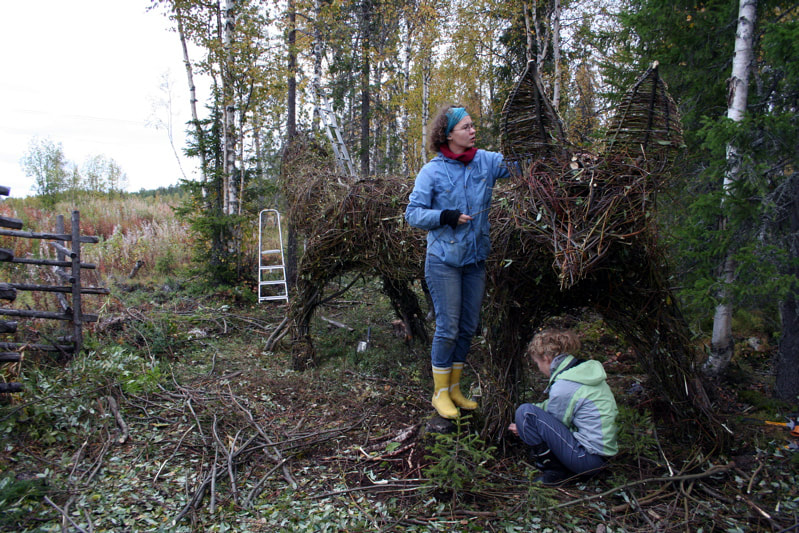
In Northern Finland, where this study takes place, nature is a typical setting for recreational activities and employment. At the University of Lapland, attention has been given to art teacher education that supports the continuation of the Northern ecoculture and enhances human–nature connectedness. In this article, we discuss art, community and environmental (ACE) studies developed through international collaborations and joint, long-term action research based on the arts. These studies are part of art teacher training and an international master's degree programme in Arctic art and design. This article explains the paradigm changes that have impacted the aims and methods employed in ACE studies since the 1990s. The discussion is framed by a Western theoretical shift from environmental aesthetics to new materialism, post-humanism and decolonisation. We conclude that ACE projects can enhance revitalisation and increase capacities to retain cultural pride and local ecocultures. Art education that is carried out in a place-specific manner, in cooperation with local communities, is one way to keep traditions alive and foster environmentalism in the North. The article has international relevance for developing art teacher training in Arctic communities but also in other remote locations in which strong bonds between nature and culture are maintained.
|
New genre Arctic art in the city of Rovaniemi Promotion of de-Arctification and pluralisImaginaries of the Arctic cause so-called Arctification that does not resonate with experienced realities of the region as a multiethnic, multicultural and multilingual place. This chapter is based on long-term art-based action research aiming to influence contemporary art, art education, transculturalism and inclusion in the Arctic, especially in the city of Rovaniemi. The research is based on need to consider the richness and the variety of the circumpolar world and to the discussion on pluriverse, new genre public art, and new genre Arctic art. The chapter concludes that socially engaged art can promote the identification of minority cultures, encounters amongst members of different cultures and representations of multiculturalism and transculturalism in public space and visual arts. Public art as an identity symbol of locality can counteract Arctification. Arts can create an understanding of the pluriverse and promote openness to multiculturalism, as well as present the Arctic as home to a rich variety of cultures.
Huhmarniemi, M. & Hiltunen, M. (2022). New genre Arctic art in the city of Rovaniemi: Promotion of de-Arctification and pluralism. In S. Miettinen, E. Mikkonen, M. C. Loschiavo dos Santos & M. Sarantou (Eds.), Artistic cartography and design explorations towards the pluriverse (pp. 64–73). Routledge. https://doi.org/10.4324/9781003285175-7 |
|
Huhmarniemi, M. & Sharova, E. (2022). Art from the margins and colonial relations: to listen or to ban the Indigenous voices from Russia? In L. Heininen, H. Exner-Pirot & J. Barnes (Eds.), Arctic Yearbook 2022: The Russian Arctic: Economics, Politics and Peoples. Arctic Portal. https://arcticyearbook.com/arctic-yearbook/2022/2022-scholarly-papers/436-art-from-the-margins-and-colonial-relations-to-listen-to-or-to-ban-artists-voices-from-russia
|
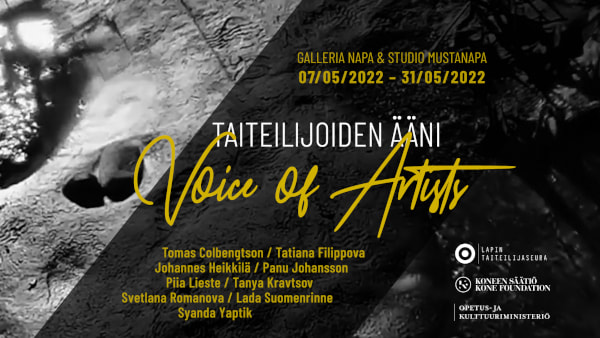
Art from the margins and colonial relations: To listen to or to ban artists' voices from Russia?The Voice of Artists exhibition was shown in an art gallery in Lapland, Finland, as a statement to consider artists´ societal and political roles as opposition to centralised power. At the same time, many Western organisations banned Russian cultural and academic collaboration due to the Russian invasion in Ukraine in the spring of 2022. This article discusses the Voice of Artists exhibition project and considers the possibilities, ethics and obstacles for non-governmental art associations when collaborating with Russian artists in the Arctic Region. The study is a continuation of arts-based action research to foster sustainability through international collaborations in arts and education. The theoretical background of the article is based on studies on critical and political contemporary art in Russia, colonial relations in Russia and art history when national romanticism endorsed and appropriated the North and the Arctic region. Power structures in Russian culture are Moscow-centred, and there is a need to decolonise and strengthen regional structures in arts and culture organisations, foundations and policies. Human-to-human contact without interference from the state seems fruitful in providing new dialogue and new knowledge.
|

Art-based events for conflicted communitiesIn the Arctic, environmental conflicts over land use and the exploitation of natural resources cast shadows over communities. Artists’ and art educators’ responses can play a meaningful role in resisting harmful developments. Emerging artistic and pedagogical interventions follow principles of socially and environmentally engaged art and art education. This visual essay describes a contemporary art event that opposed plans for an iron ore mine next to Pallas-Yllästunturi National Park in Finnish Lapland. An art-based action-research strategy was used to develop resources for communities in conflict. It focuses on describing the cyclical nature of art interventions. Analyses of activities show that art-based resources in environmental battles can foster cultural resilience, impact values, enhance hope and allow for campaigning that uses art to communicate environmental concerns. Further research into artistic interventions that open dialogue between parties in conflict is required.
|
Huhmarniemi, M. (2021). Art-based events for conflicted communities: Engaging and educating through art. International Journal on Education through Art 17(2), 271–280. https://doi.org/10.1386/eta_00065_3
Sustainable Future for Creative Tourism in Lapland |
In this chapter we present practical ideas and potential strategies for developing the use of arts-based methods in creative tourism. Arts-based methods have come to be widely discussed and promoted in various disciplines such as the social sciences, education, and tourism research and their strength is seen in their ability to engage participants’ creative expression and to obtain participation and knowledge that is not verbal. In the fields of art education and community art, the impact of art-based methods is seen on human growth and well-being, the sense of belonging, the enhancement of kinship, empowerment, and the ability to create meaningful symbols. Inspired by this, in this chapter we consider the potential of arts-based methods and creative tourism experiences for enabling learning and transformation.
Huhmarniemi, M.; Kugapi, O.; Miettinen, S. & Laivamaa, L. (2021). Sustainable Future for Creative Tourism in Lapland. In N. Duxbury; S. Albino & C. Pato Carvalho (Eds.), Creative tourism: Activating cultural resources and engaging creative travellers (pp. 239–253). Cabi International. |
Higlights from Artistic Publications
Participation to an exhibition "Counter Cartographies: Living the Land"Counter Cartographies: Living the Land presents contemporary artworks that examine our relationship to land, proposing alternative ways of thinking about and experiencing the landscape around us. Artists draw attention to the way culture, identity, emotion, ancestry, displacement, power and colonization shape and inform our understanding of land.
Alien Hiker was shown in the exhibition 8.10-2021— 5.9.2022 in the Anchorage Museum, Alaska. |
Roots, blanket embroideryRoots is a blanket embroidery with hand-dyed wool yarn on black wool fabric. The work depicts the roots of the tree and the folding of the craft as a pillar of the experience of rootedness. The work is inspired by the experience of regional tradition and the value of craftsmanship. The work is part of the Embroidered Stances art project.
Roots was presented in the Roots exhibition, Gallery Valo, Rovaniemi, 2022 |
Selected Publications
Peer-reviewed scientific articles, visual essays and book chapters
Yläjoki, T. & Huhmarniemi, M. (forthcoming 2025). Observation of Change in Pedagogical Performance. International Journal of Education through Art.
Beer, R. & Huhmarniemi, M. (2024). Shifting Ground: Art exhibition as informal pedagogy on changing Arctic. In T. Jokela, M. Huhmarniemi & K. Burnett (Eds.), Relate North: New genre Arctic art education beyond borders (pp. 38–60). InSEA publications.
Oinas, N., & Huhmarniemi, M. (2024). Art activities for staff in healthcare institutions. International Journal of Education through Art, 20(2), 193–207. https://doi.org/10.1386/eta_00161_1
Jokela, T.; Huhmarniemi, M. & Mäkitalo, T. (2024). Be the nature: Enhancing nature-connectedness through art museum pedagogy. In A. Sinner, P. Osler & W. Boyd (Eds.), Propositions for museum education: International Art Educators in Conversation (pp. 112–122). Intellect.
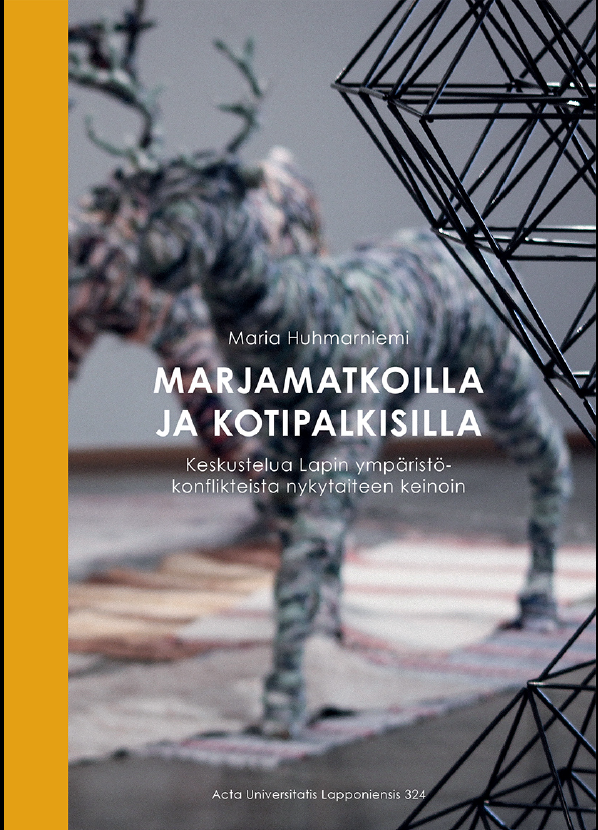
Huhmarniemi, M. (2024). Berry-picking culture and conflicts in Finland. International Journal of Education through Art International Journal of Education through Art, 20(1), 51–67. https://doi.org/10.1386/eta_00151_1
Cervantes, F. & Huhmarniemi, M. (2023). Stitching for material sensitivity: From traditional to activist embroidery. Ruukku – Studies in Artistic Research, 20 (2023). https://doi.org/10.22501/ruu.1927154
Huhmarniemi, M.; Miettinen, S. & Sarantou, M. (2023). SoftPowerArt: Tackling environmental and societal conflicts. In A. Kárpáti (Ed.), Arts-based interventions and social change in Europe (pp. 105–111). Routledge. https://doi.org/10.4324/9781003376927-15
Huhmarniemi, M. (2023). Participatory art with trees: pedagogical approach. In R. Vella & V. Pavlou (Eds.), Art, sustainability and learning communities: Call to action. (pp. 217–226). Intellect. https://doi.org/10.1386/9781789388978_15
Huhmarniemi, M. & Juhola, K. (2023). International art symposia as a space of knowledge creation and creative engagement. In C.-C. Lin, A. Sinner; & R.L. Irwin (Eds.), Community arts education: Transversal global perspectives (pp. 169–181). Intellect.
Huhmarniemi, M. & Joy, F. (2022). Forest encounters: Communication with trees, stones and powers of Nature. In G. Coutts & T. Jokela (Eds.), Relate North #9 (pp. 106–125). InSEA publications.
Huhmarniemi, M. & Salonen, A. O. (2022). Nykytaide luontosuhteen pilarina: Art Ii 2020 Biennaalin teokset tulevaisuuskeskusteluna [Contemporary art as a pillar of the relationship with nature: the works of the Art Ii 2020 Biennale as a debate on the future]. Futura 3/2022, 16–28.
Huhmarniemi, M. & Sharova, E. (2022). Art from the margins and colonial relations: to listen or to ban the Indigenous voices from Russia? In L. Heininen, H. Exner-Pirot & J. Barnes (Eds.), Arctic Yearbook 2022: The Russian Arctic: Economics, Politics and Peoples. Akureyri, Iceland: Arctic Portal. https://arcticyearbook.com/arctic-yearbook/2022/2022-scholarly-papers/436-art-from-the-margins-and-colonial-relations-to-listen-to-or-to-ban-artists-voices-from-russia (JUFO1)
Jokela, T. & Huhmarniemi, M. (2022). Arctic art education in changing nature and culture. Education in the North, 29(2), 4–27. https://doi.org/10.26203/55f2-1c04
Huhmarniemi, M. & Hiltunen, M. (2022). New genre Arctic art in the city of Rovaniemi: Promotion of de-Arctification and pluralism. In S. Miettinen, E. Mikkonen, M. C. Loschiavo dos Santos & M. Sarantou (Eds.), Artistic cartography and design explorations towards the pluriverse (pp. 64–73). Routledge. https://doi.org/10.4324/9781003285175-7
Kravtsov, T.; Huhmarniemi, M. & Kugapi, O. (2022). Encouraging empathy in creative tourism. In M. Sarantou; & S. Miettinen (Eds.), Empathy and business transformations (pp. 31– 43). Routledge.
Jokela, T., Coutts, G., Beer, R., Din, H., Usenyuk-Kravchuk, S. & Huhmarniemi, M. (2021). The potential of art and design to renewable economies. In D. Natcher and T. Koivurova (Eds.), Renewable economies in the Arctic (pp. 62–80). Routledge.
Jokela, T. & Huhmarniemi, M. (2021). Stories transmitted through art for the revitalization and decolonization of the Arctic. In R. Sørly, T. Ghaye & B. Kårtveit (Eds.), Stories of change and sustainability in the Arctic regions: The interdependence of local and global (pp. 57–71). Routledge.
Jokela, T., Huhmarniemi, M., Beer, R. & Soloviova, A. (2021). Mapping new genre Arctic art. In L. Heininen; H. Exner-Pirot & J. Barnes (eds.), Arctic Yearbook 2021: Defining and mapping sovereignties, policies and perceptions. Arctic Portal. https://arcticyearbook.com/arctic-yearbook/2021/2021-scholarly-papers/400-mapping-new-genre-arctic-art
Huhmarniemi, M. (2021). Empatian ja yhteisön laajentaminen taidekasvatuksen ja yhteisötaiteen keinoin. [Expanding sense of community through art education and community arts]. Research in Arts and Education, 2021(3), 151–166, https://doi.org/10.54916/rae.119568
Huhmarniemi, M. (2021). Art-based events for conflicted communities: Engaging and educating through art. International Journal of Education through Art, 17(2), 271–280. https://doi.org/10.1386/eta_00065_3
Huhmarniemi, M. (2021). Forest talks to us – art and coping with forest disputes. ART Education VISUAL Journal IMAG, 2021(11). https://doi.org/10.24981/2414-3332-11.2021-8
Huhmarniemi, M.; Kugapi, O.; Miettinen, S. & Laivamaa, L. (2021). Sustainable future for creative tourism in Lapland. In N. Duxbury; S. Albino & C. Pato Carvalho (Eds.), Creative tourism: Activating cultural resources and engaging creative travellers (pp. 239–253). Cabi International.
Huhmarniemi, M.; Jokela, T. & Hiltunen, M. (2021). Paradigm shifts in northern art, community and environment studies for art teacher education. Social Sciences & Humanities Open, 4(1), 100181, https://doi.org/10.1016/j.ssaho.2021.100181
Sarantou, M.; Kugapi, O. & Huhmarniemi, M. (2021). Context mapping for creative tourism. Annals of Tourism Research, 86. https://doi.org/10.1016/j.annals.2020.103064
Huhmarniemi, M. & Jokela, T. (2020). Arctic art and material culture: Northern knowledge and cultural resilience in the Northernmost Europe. In L. Heininen; H. Exner-Pirot & J. Barnes (Eds.), Arctic yearbook 2020: Climate change and the Arctic: global origins, regional responsibilities? Akureyri, Iceland: Arctic Portal. Available from https://arcticyearbook.com/arctic-yearbook/2020/2020-scholarly-papers/350-arctic-art-and-material-culture-northern-knowledge-and-cultural-resilience-in-northernmost-europe
Huhmarniemi, M., Hiltunen, M. & Jokela, T. (2020). Pöheikön kutsu: taideperustaista ympäristökasvatusta pohjoisen luontokulttuurissa. [Art-based environmental education in Northern ecoculture]. In T. Kyrönlampi, K. Mäkitalo & M. Uitto (Eds.), Esi- ja alkuopetuksen käsikirja. [Handbook for primary education] (pp. 199–222). PS-kustannus.
Jokela, T. & Huhmarniemi, Maria (2020). Expanding nature photography: Fostering an innovative use of cultural ecosystem services in the Arctic. In T. Jokela & G. Coutts (Eds.), Relate North: Traditions and innovation in art and design education (pp. 46–69). InSEA Publications. https://doi.org/10.24981/2020-7
Kugapi, O., Huhmarniemi, M. & Laivamaa, L. (2020). A Potential treasure for tourism: Crafts as employment and a cultural experience service in the Nordic North. In A Walmsley, K. Åberg, P. Blinnikka, G.T. Jóhannesson, G.T. (Eds.), Tourism employment in Nordic countries: Trends, practices, and opportunities (pp. 77–99). Palgrave Macmillan. https://doi.org/10.1007/978-3-030-47813-1
Raatikainen, K., Juhola, K., Huhmarniemi, M. & Peña-Lagos, H. (2020). ”Face the cow”: Reconnecting to nature and increasing capacities for pro-environmental agency. Ecosystems and People, 16(1), 273–289. https://doi.org/10.1080/26395916.2020.1817151
Huhmarniemi, M. & Jokela T. (2020). Arctic arts with pride: discourses on Arctic arts, culture and sustainability. Sustainability, 12(2), 604; https://doi.org/10.3390/su12020604
Härkönen, E., Huhmarniemi, M. & Jokela, T. (2018). Crafting sustainability. Handcraft in contemporary art and cultural sustainability in Lapland. Sustainability 10(6), https://doi.org/10.3390/su10061907
Beer, R. & Huhmarniemi, M. (2024). Shifting Ground: Art exhibition as informal pedagogy on changing Arctic. In T. Jokela, M. Huhmarniemi & K. Burnett (Eds.), Relate North: New genre Arctic art education beyond borders (pp. 38–60). InSEA publications.
Oinas, N., & Huhmarniemi, M. (2024). Art activities for staff in healthcare institutions. International Journal of Education through Art, 20(2), 193–207. https://doi.org/10.1386/eta_00161_1
Jokela, T.; Huhmarniemi, M. & Mäkitalo, T. (2024). Be the nature: Enhancing nature-connectedness through art museum pedagogy. In A. Sinner, P. Osler & W. Boyd (Eds.), Propositions for museum education: International Art Educators in Conversation (pp. 112–122). Intellect.
Huhmarniemi, M. (2024). Berry-picking culture and conflicts in Finland. International Journal of Education through Art International Journal of Education through Art, 20(1), 51–67. https://doi.org/10.1386/eta_00151_1
Cervantes, F. & Huhmarniemi, M. (2023). Stitching for material sensitivity: From traditional to activist embroidery. Ruukku – Studies in Artistic Research, 20 (2023). https://doi.org/10.22501/ruu.1927154
Huhmarniemi, M.; Miettinen, S. & Sarantou, M. (2023). SoftPowerArt: Tackling environmental and societal conflicts. In A. Kárpáti (Ed.), Arts-based interventions and social change in Europe (pp. 105–111). Routledge. https://doi.org/10.4324/9781003376927-15
Huhmarniemi, M. (2023). Participatory art with trees: pedagogical approach. In R. Vella & V. Pavlou (Eds.), Art, sustainability and learning communities: Call to action. (pp. 217–226). Intellect. https://doi.org/10.1386/9781789388978_15
Huhmarniemi, M. & Juhola, K. (2023). International art symposia as a space of knowledge creation and creative engagement. In C.-C. Lin, A. Sinner; & R.L. Irwin (Eds.), Community arts education: Transversal global perspectives (pp. 169–181). Intellect.
Huhmarniemi, M. & Joy, F. (2022). Forest encounters: Communication with trees, stones and powers of Nature. In G. Coutts & T. Jokela (Eds.), Relate North #9 (pp. 106–125). InSEA publications.
Huhmarniemi, M. & Salonen, A. O. (2022). Nykytaide luontosuhteen pilarina: Art Ii 2020 Biennaalin teokset tulevaisuuskeskusteluna [Contemporary art as a pillar of the relationship with nature: the works of the Art Ii 2020 Biennale as a debate on the future]. Futura 3/2022, 16–28.
Huhmarniemi, M. & Sharova, E. (2022). Art from the margins and colonial relations: to listen or to ban the Indigenous voices from Russia? In L. Heininen, H. Exner-Pirot & J. Barnes (Eds.), Arctic Yearbook 2022: The Russian Arctic: Economics, Politics and Peoples. Akureyri, Iceland: Arctic Portal. https://arcticyearbook.com/arctic-yearbook/2022/2022-scholarly-papers/436-art-from-the-margins-and-colonial-relations-to-listen-to-or-to-ban-artists-voices-from-russia (JUFO1)
Jokela, T. & Huhmarniemi, M. (2022). Arctic art education in changing nature and culture. Education in the North, 29(2), 4–27. https://doi.org/10.26203/55f2-1c04
Huhmarniemi, M. & Hiltunen, M. (2022). New genre Arctic art in the city of Rovaniemi: Promotion of de-Arctification and pluralism. In S. Miettinen, E. Mikkonen, M. C. Loschiavo dos Santos & M. Sarantou (Eds.), Artistic cartography and design explorations towards the pluriverse (pp. 64–73). Routledge. https://doi.org/10.4324/9781003285175-7
Kravtsov, T.; Huhmarniemi, M. & Kugapi, O. (2022). Encouraging empathy in creative tourism. In M. Sarantou; & S. Miettinen (Eds.), Empathy and business transformations (pp. 31– 43). Routledge.
Jokela, T., Coutts, G., Beer, R., Din, H., Usenyuk-Kravchuk, S. & Huhmarniemi, M. (2021). The potential of art and design to renewable economies. In D. Natcher and T. Koivurova (Eds.), Renewable economies in the Arctic (pp. 62–80). Routledge.
Jokela, T. & Huhmarniemi, M. (2021). Stories transmitted through art for the revitalization and decolonization of the Arctic. In R. Sørly, T. Ghaye & B. Kårtveit (Eds.), Stories of change and sustainability in the Arctic regions: The interdependence of local and global (pp. 57–71). Routledge.
Jokela, T., Huhmarniemi, M., Beer, R. & Soloviova, A. (2021). Mapping new genre Arctic art. In L. Heininen; H. Exner-Pirot & J. Barnes (eds.), Arctic Yearbook 2021: Defining and mapping sovereignties, policies and perceptions. Arctic Portal. https://arcticyearbook.com/arctic-yearbook/2021/2021-scholarly-papers/400-mapping-new-genre-arctic-art
Huhmarniemi, M. (2021). Empatian ja yhteisön laajentaminen taidekasvatuksen ja yhteisötaiteen keinoin. [Expanding sense of community through art education and community arts]. Research in Arts and Education, 2021(3), 151–166, https://doi.org/10.54916/rae.119568
Huhmarniemi, M. (2021). Art-based events for conflicted communities: Engaging and educating through art. International Journal of Education through Art, 17(2), 271–280. https://doi.org/10.1386/eta_00065_3
Huhmarniemi, M. (2021). Forest talks to us – art and coping with forest disputes. ART Education VISUAL Journal IMAG, 2021(11). https://doi.org/10.24981/2414-3332-11.2021-8
Huhmarniemi, M.; Kugapi, O.; Miettinen, S. & Laivamaa, L. (2021). Sustainable future for creative tourism in Lapland. In N. Duxbury; S. Albino & C. Pato Carvalho (Eds.), Creative tourism: Activating cultural resources and engaging creative travellers (pp. 239–253). Cabi International.
Huhmarniemi, M.; Jokela, T. & Hiltunen, M. (2021). Paradigm shifts in northern art, community and environment studies for art teacher education. Social Sciences & Humanities Open, 4(1), 100181, https://doi.org/10.1016/j.ssaho.2021.100181
Sarantou, M.; Kugapi, O. & Huhmarniemi, M. (2021). Context mapping for creative tourism. Annals of Tourism Research, 86. https://doi.org/10.1016/j.annals.2020.103064
Huhmarniemi, M. & Jokela, T. (2020). Arctic art and material culture: Northern knowledge and cultural resilience in the Northernmost Europe. In L. Heininen; H. Exner-Pirot & J. Barnes (Eds.), Arctic yearbook 2020: Climate change and the Arctic: global origins, regional responsibilities? Akureyri, Iceland: Arctic Portal. Available from https://arcticyearbook.com/arctic-yearbook/2020/2020-scholarly-papers/350-arctic-art-and-material-culture-northern-knowledge-and-cultural-resilience-in-northernmost-europe
Huhmarniemi, M., Hiltunen, M. & Jokela, T. (2020). Pöheikön kutsu: taideperustaista ympäristökasvatusta pohjoisen luontokulttuurissa. [Art-based environmental education in Northern ecoculture]. In T. Kyrönlampi, K. Mäkitalo & M. Uitto (Eds.), Esi- ja alkuopetuksen käsikirja. [Handbook for primary education] (pp. 199–222). PS-kustannus.
Jokela, T. & Huhmarniemi, Maria (2020). Expanding nature photography: Fostering an innovative use of cultural ecosystem services in the Arctic. In T. Jokela & G. Coutts (Eds.), Relate North: Traditions and innovation in art and design education (pp. 46–69). InSEA Publications. https://doi.org/10.24981/2020-7
Kugapi, O., Huhmarniemi, M. & Laivamaa, L. (2020). A Potential treasure for tourism: Crafts as employment and a cultural experience service in the Nordic North. In A Walmsley, K. Åberg, P. Blinnikka, G.T. Jóhannesson, G.T. (Eds.), Tourism employment in Nordic countries: Trends, practices, and opportunities (pp. 77–99). Palgrave Macmillan. https://doi.org/10.1007/978-3-030-47813-1
Raatikainen, K., Juhola, K., Huhmarniemi, M. & Peña-Lagos, H. (2020). ”Face the cow”: Reconnecting to nature and increasing capacities for pro-environmental agency. Ecosystems and People, 16(1), 273–289. https://doi.org/10.1080/26395916.2020.1817151
Huhmarniemi, M. & Jokela T. (2020). Arctic arts with pride: discourses on Arctic arts, culture and sustainability. Sustainability, 12(2), 604; https://doi.org/10.3390/su12020604
Härkönen, E., Huhmarniemi, M. & Jokela, T. (2018). Crafting sustainability. Handcraft in contemporary art and cultural sustainability in Lapland. Sustainability 10(6), https://doi.org/10.3390/su10061907